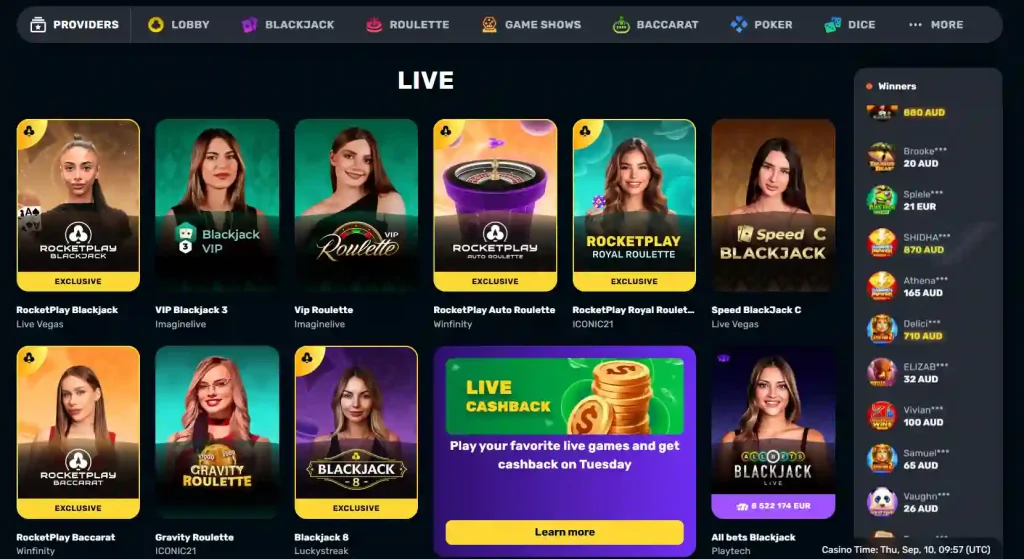
Is RocketPlay Trustworthy in Australia? Licence, ACMA and Complaints
 Available in US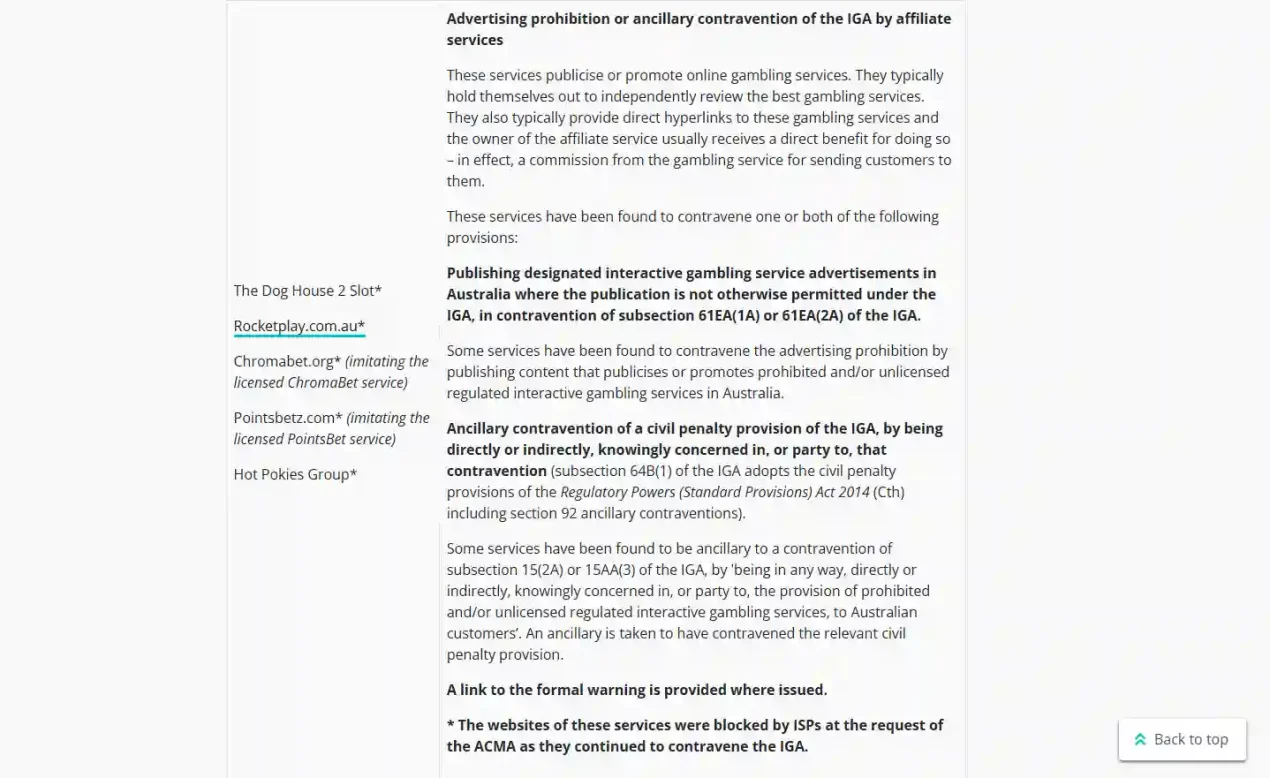
Content
RocketPlay is currently operated by Scores55 Tech B.V., company number 162990, and the operator discloses Curaçao Gaming Control Board licence OGL/2024/1307/0748. That is an offshore licence, not an Australian gambling licence. For an Australian reader, that distinction matters more than a generic “licensed casino” label because Australian online gambling law and ACMA enforcement operate separately from Curaçao licensing.
ACMA has also recorded RocketPlay-related enforcement and domain blocking. Historical enforcement named Dama N.V. in connection with RocketPlay, while RocketPlay’s current site identifies Scores55 Tech B.V. as the operator. More recent ACMA reports list RocketPlay-related domains among sites referred for blocking. That creates a mixed trust picture: a current disclosed offshore operator and licence, visible support and complaint routes, but no Australian authorisation and a material Australian regulatory history.
The current operator and licence
RocketPlay’s current official footer identifies Scores55 Tech B.V. as the operator, registered under company number 162990 in Willemstad, Curaçao. The same official material states that the site is licensed and authorised by the Curaçao Gaming Control Board under licence OGL/2024/1307/0748. These details are also repeated on RocketPlay’s complaints and terms pages.
Those facts should be stated precisely. A Curaçao licence is evidence of the operator’s disclosed licensing jurisdiction, but it does not create an Australian licence or Australian regulatory protection. An Australian user therefore should not translate “licensed in Curaçao” into “licensed for Australia.” The two claims are legally and practically different.
This distinction is central to judging trust. A licence tells a reader something about the operator’s formal regulatory base. It does not erase the rules of the country from which a service is accessed, and it does not replace the Australian regulator’s findings about services offered to people in Australia.
What Australian law says about online casino services
The Australian Communications and Media Authority, or ACMA, is the federal regulator that enforces the Interactive Gambling Act 2001. ACMA’s current guidance says the Act makes it illegal for gambling providers to offer certain online services to people in Australia. The banned services include online casinos, along with several other categories such as in-play sports betting and sports betting services without an Australian licence.
The wording is important because the core prohibition is provider-side. Australian law prohibits providers from offering online casino services to people in Australia, while that does not by itself mean an individual Australian player commits an offence simply by visiting a site. Product access and provider compliance therefore need to be assessed as separate questions.
ACMA also states that banned services must not be advertised in Australia. The regulatory framework is consequently broader than whether a gambling site loads in a browser. It covers the provision and advertising of prohibited services and gives ACMA enforcement tools against operators and related websites.
RocketPlay’s ACMA enforcement history
ACMA’s April to June 2025 interactive-gambling report recorded Dama N.V. for providing an unlicensed regulated interactive gambling service associated with RocketPlay. That record is important, but it is historical. RocketPlay’s current official site now identifies Scores55 Tech B.V. as operator, so Dama N.V. should not be described as the present operator merely because it appears in an older enforcement report.
The correct reading is a timeline: ACMA has a documented enforcement record connected with the RocketPlay brand, while the current operator information on RocketPlay itself has changed. That history remains relevant to an Australian trust assessment because it shows that the brand has appeared in Australian regulatory action, even though the entity named in the older action is not the operator currently disclosed by the site.
This is also why a trust page should use primary documents rather than compressing old and new facts into a single sentence. Operator identity, licence jurisdiction and Australian enforcement history each answer a different question and can change at different times.
RocketPlay-related domains have been blocked
ACMA’s website-blocking reports provide a second regulatory signal. In the January to March 2026 report, ACMA listed rocketplay22.com and rocketplay29.com among blocked websites. That same report separately recorded a formal warning against Pulsup Ltd. for publishing designated interactive gambling service advertisements through Rocketplay.com.au. The affiliate-style domain should not be confused with RocketPlay’s current operator or official site.
ACMA’s April to June 2026 report later listed rocketplay30.com among another set of blocked domains. The broader report says ACMA referred 187 websites to internet service providers for blocking during that quarter, with the majority of blocked services being casino-style sites and some also providing wagering without an Australian licence.
Domain blocking has a practical implication beyond legal terminology: access routes can disappear, change or be replaced. That makes old bookmarks, mirror domains and third-party login links a poor basis for account security. Users should not respond to a blocked address by hunting for random mirrors or bypass instructions. If access or account status is unclear, the safer route is to rely on the operator’s current documented support channels.
How active ACMA enforcement is
RocketPlay does not sit in an isolated enforcement environment. ACMA’s published material shows sustained action against illegal gambling services and related affiliates. Its current Interactive Gambling Act guidance says more than 220 online gambling services have withdrawn from the Australian market since the 2017 reforms. Separate 2026 reporting shows hundreds of sites being investigated or referred for blocking across successive quarters.
For April to June 2026 alone, ACMA reported 30 investigations involving 76 gambling sites, 56 findings of breaches and 187 websites referred for blocking. Thirty findings concerned the provision of prohibited interactive gambling services to Australian customers, while 24 concerned unlicensed regulated interactive gambling services. These figures describe the regulatory environment, not RocketPlay’s individual case alone.
The practical inference is straightforward: offshore casino access in Australia exists within an actively enforced market, and domain availability today is not evidence of Australian authorisation. A page that focuses only on whether a site loads or displays AUD misses the most important regulatory context.
The 2026 reforms do not all start immediately
Australia passed another Interactive Gambling Act reform package on 19 August 2026. ACMA says the reforms include tighter gambling advertising restrictions, a global advertising opt-out register, limits on some direct marketing inducements, a ban on customer-activity-based commissions for staff or affiliates, stronger enforcement tools and changes intended to strengthen BetStop.
The commencement date matters. ACMA currently states that most of these reforms commence on 1 January 2027. They should therefore not be described as though every new measure is already fully operational yet. This timing check prevents a recent legislative development from being turned into an inaccurate statement about the rules already in force.
For RocketPlay specifically, the reform package reinforces the importance of distinguishing current law and current ACMA action from future measures that have passed Parliament but have not yet commenced. It does not change the existing fact that online casino services are already among the services ACMA identifies as prohibited for providers to offer to people in Australia.
What the Curaçao licence does and does not tell you
RocketPlay’s Curaçao licence gives a reader a concrete operator and licensing reference to check. It is materially better evidence than an unsourced claim that the casino is “regulated internationally.” The operator name, company number and licence number can be matched across RocketPlay’s current official pages.
However, offshore licensing should not be used to imply access to Australian-licensed dispute resolution, Australian wagering protections or local licensing oversight. An Australian reader therefore needs to evaluate the site’s support, complaints handling and payment controls knowing that the local regulator’s relationship to the service is enforcement, not licensing.
This difference can affect expectations if a dispute becomes difficult. A player should not assume that the Australian licensing framework for domestic online wagering providers applies to an offshore online casino merely because the website presents Australian localisation or AUD balances.
Support and complaint routes available through RocketPlay
RocketPlay publishes two ordinary support routes: 24/7 live chat and [email protected]. Its complaints page also directs users to the AskGamblers Casino Complaints Service for disputes involving areas such as payments, deposits, bonuses, software or account handling. That gives users an external industry complaint channel in addition to the operator’s own support.
The existence of a complaint route is useful, but it should not be mistaken for an Australian regulator-backed dispute scheme. AskGamblers is a third-party industry platform, not ACMA and not an Australian gambling ombudsman. A complaint resolved there is therefore different in status from a decision made by a statutory regulator or licensed local dispute body.
For payment problems, users should preserve transaction records, the withdrawal status shown in the account and any support correspondence. The withdrawals guide explains the operator and provider stages, while the verification guide covers the current KYC document process. Separating those stages gives a complaint a clearer factual timeline.
Third-party reputation signals are useful but secondary
Independent review platforms currently give RocketPlay strong ratings. Casino Guru assigns it a very high Safety Index, while AskGamblers also rates the casino highly. These are meaningful reputation signals because they aggregate industry review work and complaint history, but they are not regulator findings and should not outrank primary licensing or ACMA evidence.
A high third-party score can indicate that a review platform has assessed areas such as terms, complaints or operational behaviour favourably. It cannot establish an Australian licence, override a blocking action or guarantee that an individual withdrawal will be successful. Ratings also change over time as review sites update their methodologies and case histories.
The useful way to read these signals is therefore comparative rather than absolute: they add context to the operator’s reputation, while the legal and licensing sections establish what can be verified from official sources.
Responsible gambling tools and BetStop scope
RocketPlay’s own material says deposit limits and self-exclusion tools are available. These account controls are relevant to trust because they show that the operator provides mechanisms for restricting gambling activity. A user who needs to reduce access should use those controls early rather than waiting for losses or account stress to escalate.
Australia also has BetStop, the National Self-Exclusion Register. ACMA explains that BetStop lets people exclude themselves from Australian-licensed online and phone wagering services. Its scope does not turn BetStop into a universal block on offshore online casino services. That distinction is particularly important when assessing RocketPlay because no Australian local licence is verified for the casino.
ACMA’s guidance also points to the National Gambling Helpline and Gambling Help Online for free and confidential support. Those resources sit outside the casino and can be used regardless of whether an operator’s own account controls are sufficient.
What a trust assessment should check in practice
- Confirm the current operator name and licence on RocketPlay’s own pages rather than relying on an old review.
- Keep the Curaçao licence separate from Australian licensing; it does not amount to authorisation by an Australian gambling regulator.
- Read ACMA reports as primary evidence of Australian enforcement and website blocking.
- Do not treat an accessible domain, AUD display or Australian localisation as proof of Australian authorisation.
- Use official support first for account or payment issues and keep written records of the case.
- If verification is involved, follow the current KYC upload instructions rather than generic third-party checklists.
- Treat AskGamblers and Casino Guru ratings as reputation indicators, not legal determinations.
- If gambling control is the concern, use RocketPlay’s limits or self-exclusion tools and Australian independent support resources.
This checklist keeps unlike types of evidence in the right order. Licensing evidence establishes who regulates the operator. ACMA material establishes the Australian enforcement context. Support and complaints routes show what recourse exists at the operator and industry level. None of those elements should be substituted for another.
So, is RocketPlay trustworthy for an Australian reader?
RocketPlay has several verifiable trust markers: a currently disclosed operator, a named Curaçao licence, published support channels, an external complaint route and responsible gambling tools. Those are concrete positives and are more informative than anonymous testimonials or unsupported claims that the casino is “safe.”
The Australian side of the picture is materially more cautious. RocketPlay does not have a verified Australian local licence, Australian law prohibits providers from offering online casino services to people in Australia, and ACMA has published RocketPlay-related enforcement and domain-blocking records. That means an Australian reader should not assume the protections or continuity associated with a locally licensed wagering provider.
The most defensible conclusion is therefore not a one-word verdict. RocketPlay is an identifiable offshore operator with a current Curaçao licence and visible support infrastructure, but its Australian regulatory history and lack of verified local licensing are significant trust factors. Anyone comparing the product should weigh those facts alongside withdrawals, verification and account access rather than treating a licence badge or third-party rating as the whole answer. For the broader product analysis, return to the RocketPlay Australia review or use the account access for practical account mechanics.
This material was created by the RocketPlay Guide team.
Related posts
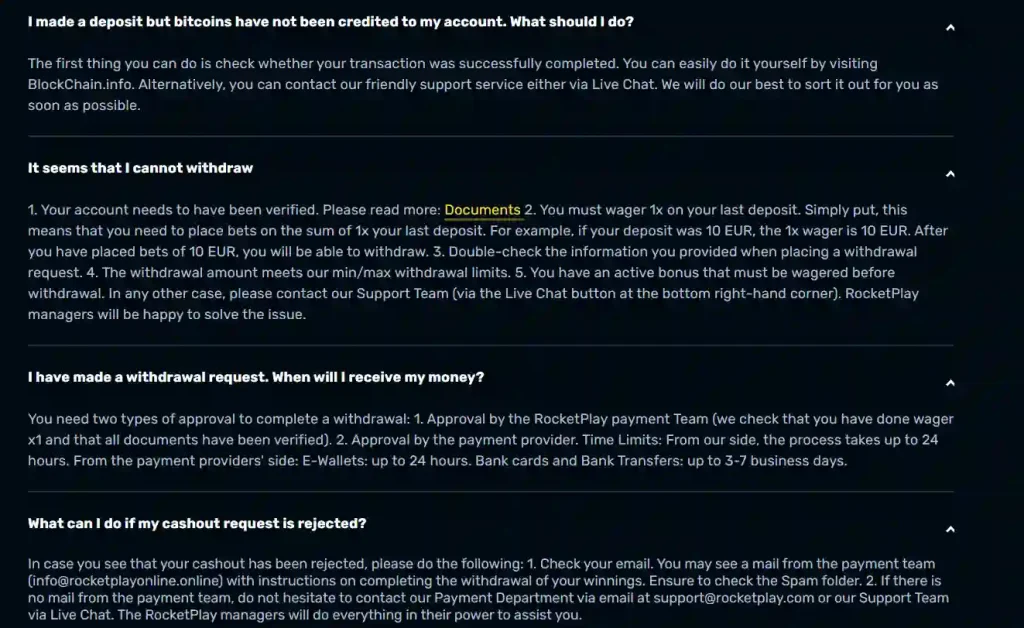
RocketPlay Withdrawals: Limits, Timing and Verification

RocketPlay Pokies for Australian Players